The best baserunners aren’t the fastest. They’re the ones who stay one step ahead of the play.
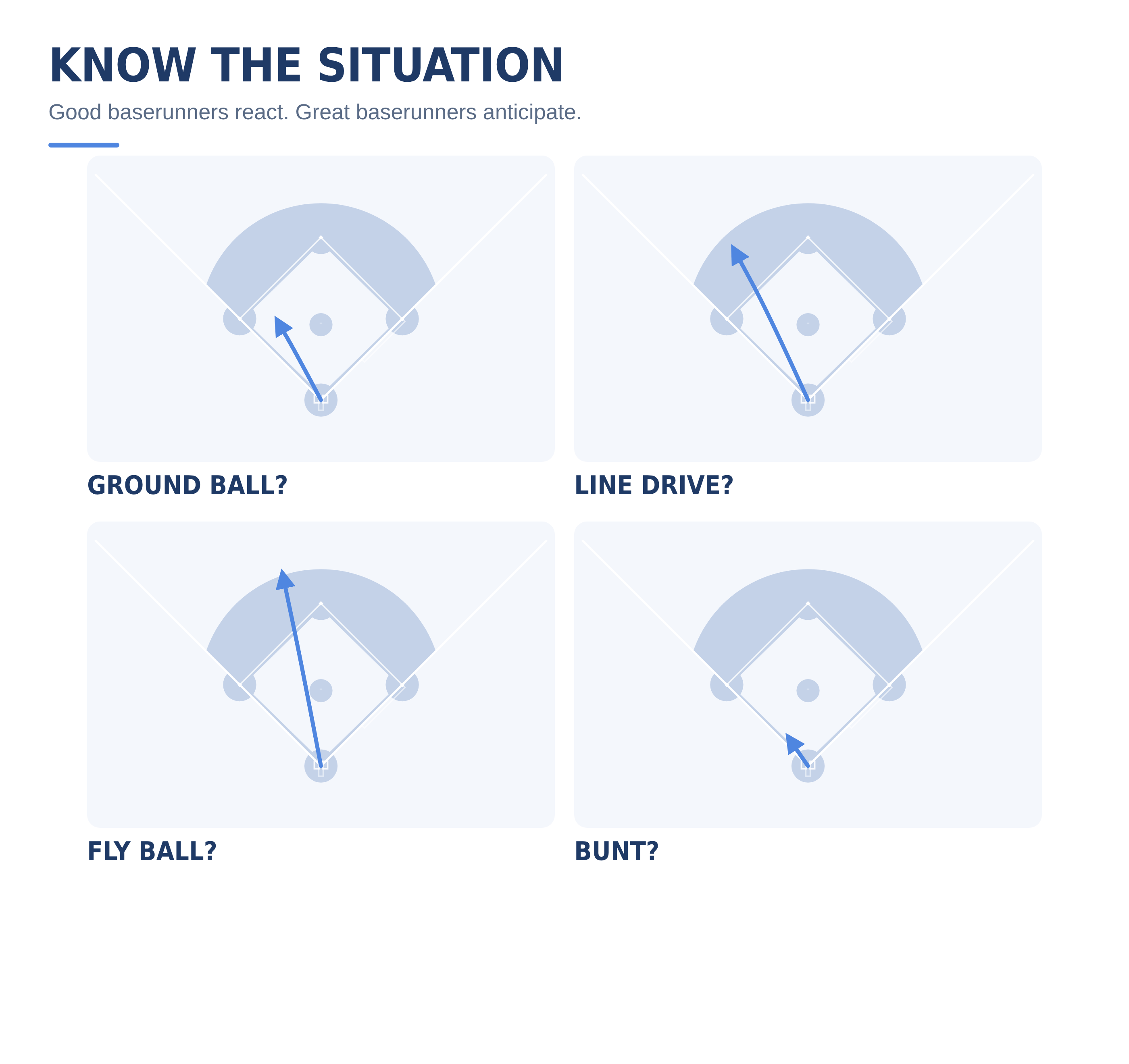
Once you hit the ball, you are a baserunner.
Your job is to think ahead, stay alert, and seize every opportunity. A split-second lapse can cost you an out. Great baserunning combines speed, game awareness, and technique to turn hits into runs and spark your team’s offense.
Always know where the ball is, except when it is behind you. In those situations, trust your third-base coach’s signals.
The best baserunners aren’t always the fastest. They’re the ones who make smart decisions under pressure.
Baserunning Fundamentals
Every successful baserunner follows the same principles:
- Track the ball. Know where the baseball is at all times and rely on your coaches’ cues when it leaves your field of vision.
- Run smart. Hustle through first base, round aggressively, and always anticipate an overthrow or defensive mistake.
- Perfect your timing. Get explosive secondary leads, read balls in the dirt, and steal with confidence when the opportunity presents itself.
- Force the defense to execute. Make defenders throw the ball. Pressure creates mistakes.
- Know the defense. Identify strong and weak throwing arms before the game begins.
- Tag on foul balls. Always return to the base and be prepared to advance if the ball is caught.
Every extra 90 feet matters.
Running Through First Base
Never assume the play is over once you hit the ball.
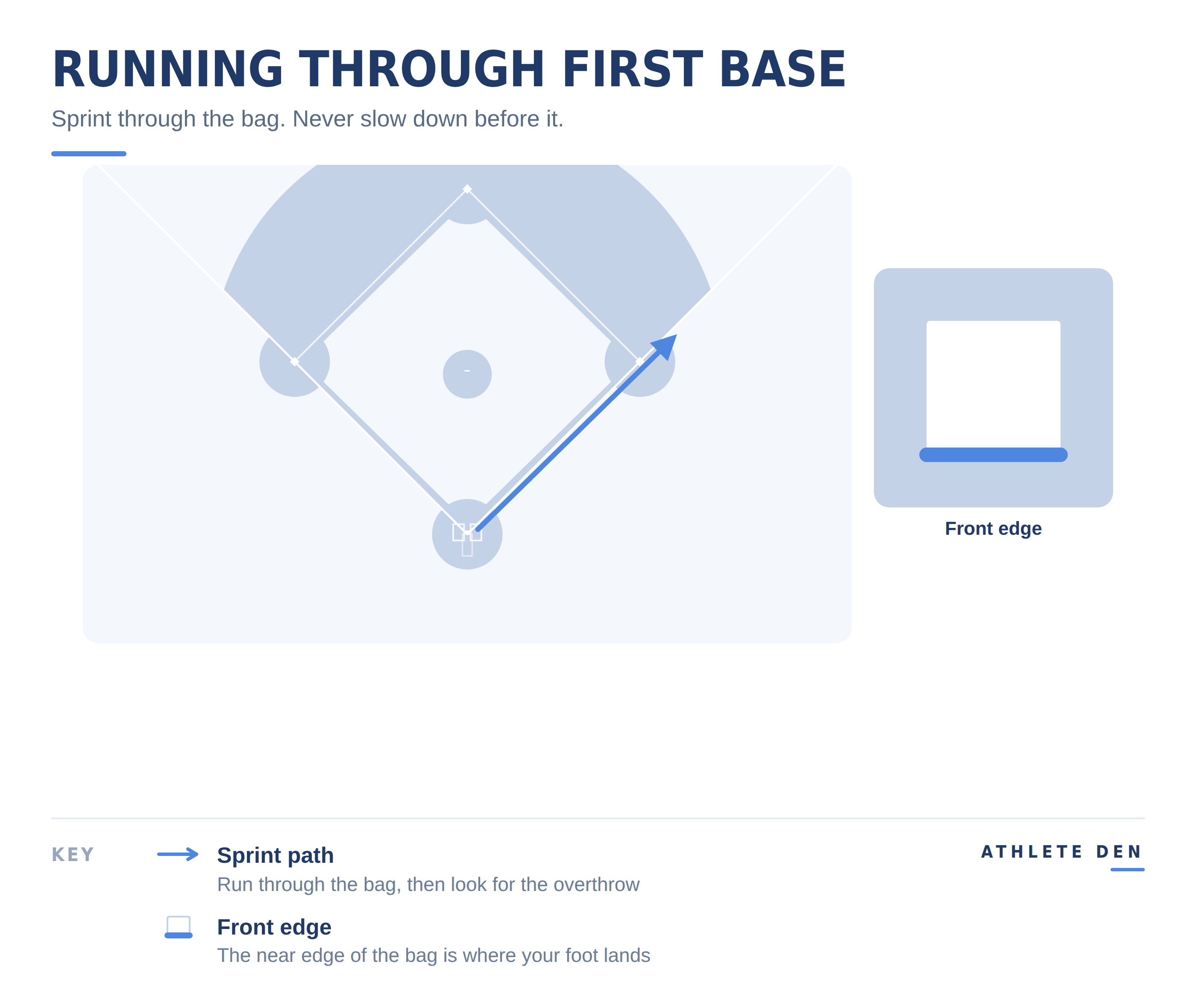
Sprint at full speed through first base. About halfway down the line, locate the baseball. As you approach the bag, check the first baseman so you’re prepared if they attempt a swipe tag.
Hit the front edge of the base while maintaining a straight line through it.
After crossing first, slow down under control, widen out into foul territory, and immediately look to your right. A dropped ball or overthrow can quickly turn a single into extra bases.
One important reminder: Never slide into first base unless you’re avoiding a tag. Running through the bag is almost always faster than sliding.
Rounding First Base
When there’s no play at first, don’t make a sharp turn.
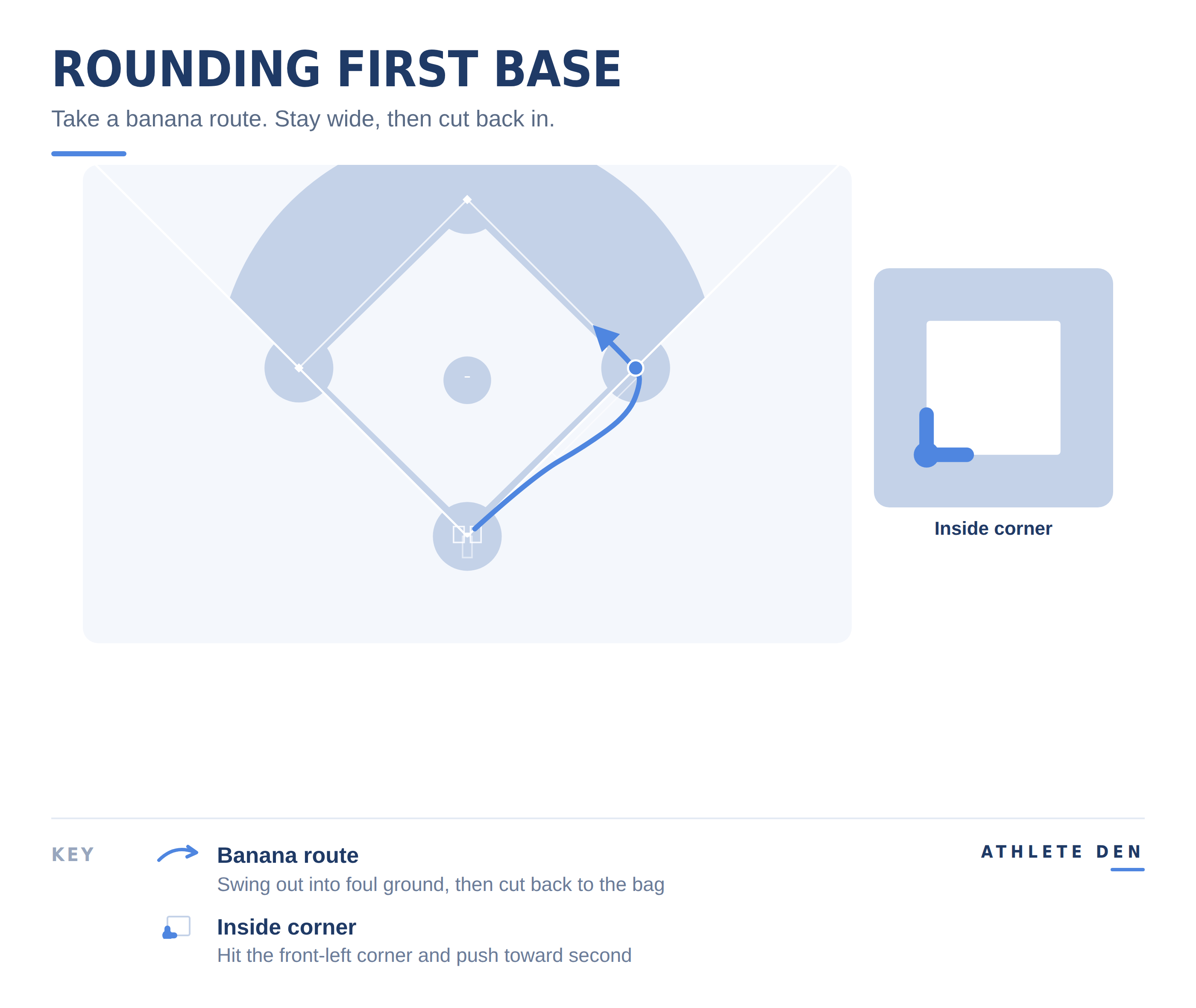
Instead, take a smooth banana route that allows you to maintain your speed while preparing to advance to second.
Hit the inside front-left corner of first base and lean your left shoulder toward second base. Take two or three controlled shuffle steps while reading the outfielder.
If they bobble the baseball or make an off-line throw, be ready to take the extra base.
Aggressive baserunners create pressure. Reckless baserunners create outs. Learn the difference.
Leading Off First Base
Before every pitch, check with your third-base coach for signs, the number of outs, and defensive positioning.
Start from the back-left corner of first base, square yourself toward second, and maintain an athletic stance with your weight balanced and ready to react.
A general guideline for lead distance is:
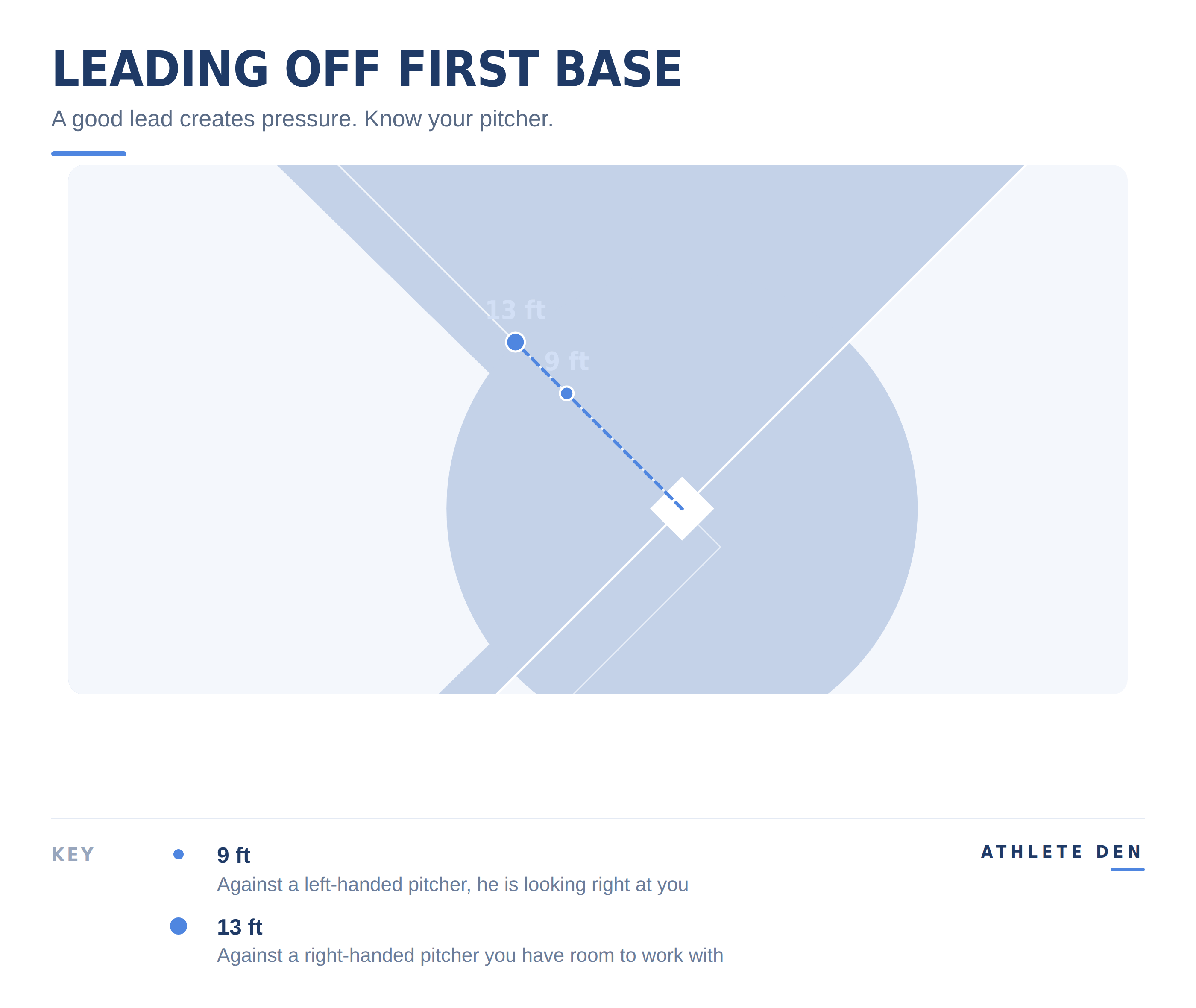
- Right-handed pitchers: 9-foot (conservative), 11-foot (standard), or 13-foot (against pitchers with slow or weak pickoff moves).
- Left-handed pitchers: Stay closer, around 9 feet, because they can see you more easily.
As the pitcher delivers the ball, take an explosive secondary lead by shuffling forward under control. Stay on the balls of your feet and be prepared to react immediately to a ball in the dirt or a pickoff attempt.
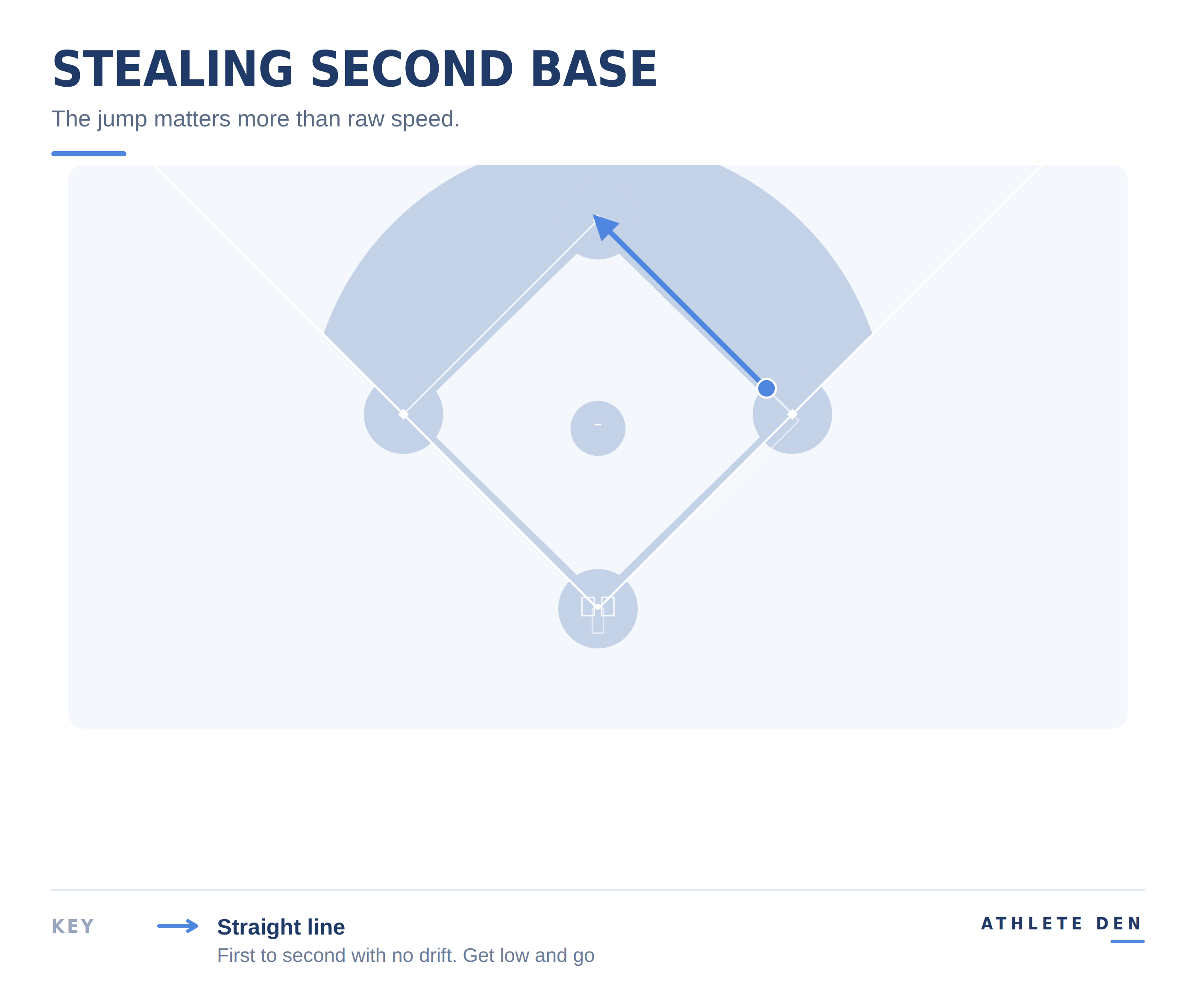
Stealing Second Base
Successful base stealing starts before the pitch is ever thrown.
Study the pitcher’s delivery. Learn their timing, pickoff tendencies, and how quickly they get the ball to home plate.
When you commit, drive your left knee toward second and stay low out of your first step. Avoid unnecessary movement that slows your jump.
A great jump is often more valuable than elite speed.
Playing from Second Base
Your lead changes depending on the number of outs.
With zero or one out, stay closer to the base so you can react to line drives and advance on base hits.
With two outs, take a slightly deeper lead because you’re running on contact.
When advancing to third:
- Advance on ground balls hit at or to the left of you.
- Stay put on balls hit to your right unless there’s an obvious opportunity.
- Never get doubled off on a line drive. Freeze first, then react.
On bunt plays, shorten your lead slightly while maintaining forward momentum. Don’t let middle infielders force you back to the base.
Leading from Third Base
A runner on third can completely change an inning.
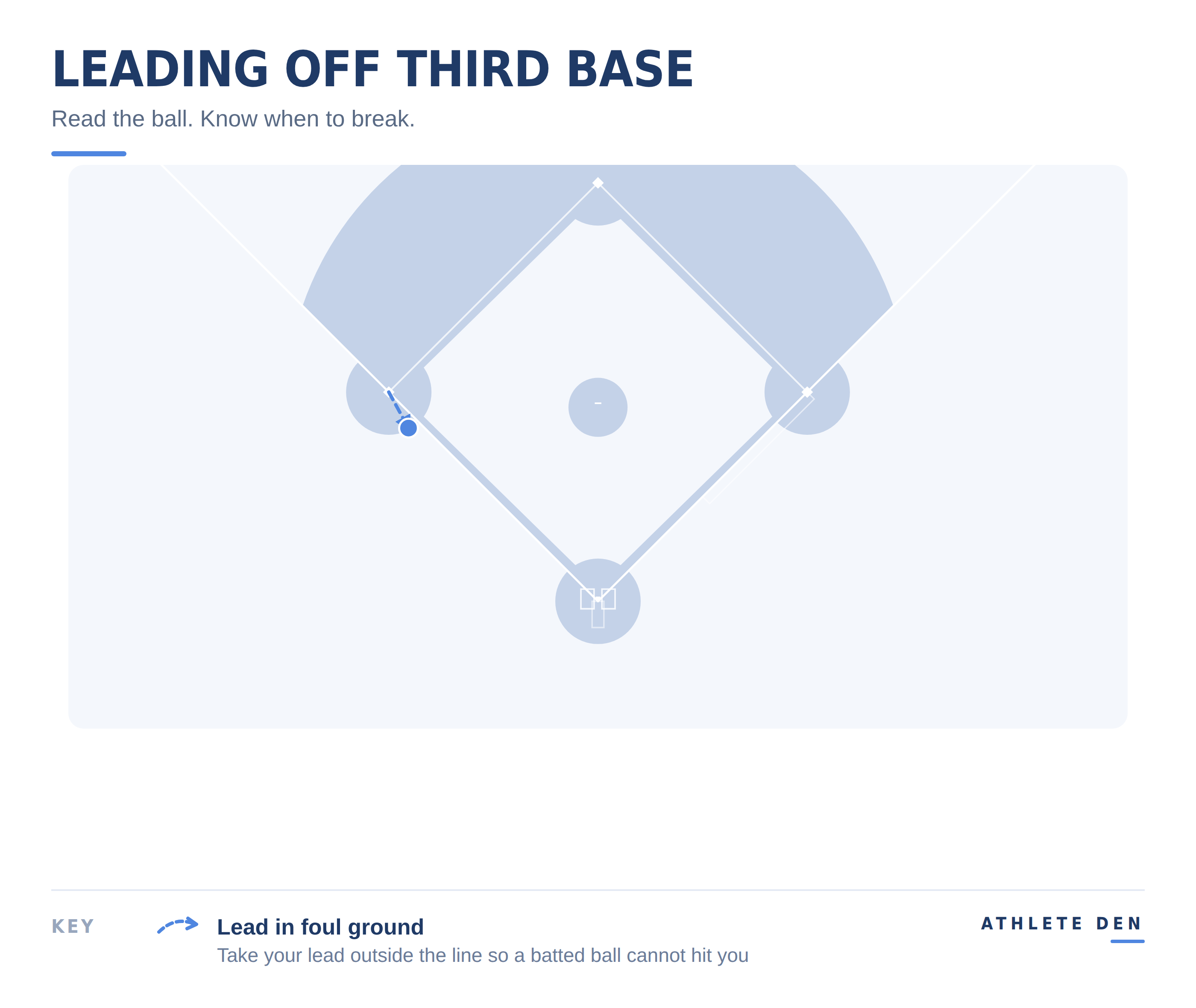
Start on the base, work toward the coach’s box, then extend your lead toward home while remaining relaxed and balanced.
After every pitch, return to the bag in fair territory. This helps block the catcher’s throwing lane if they attempt a pickoff.
Stay engaged every pitch because one defensive mistake can score a run.
Advancing from Third Base
Scoring from third often comes down to reading the ball correctly.
Only break for home once the baseball has passed the pitcher. If the corners are playing in, the ball generally needs to get through the infield before you commit.
On a contact play, run immediately once the ball is put into play.
Stealing home is rare, but opportunities can exist against slow-working pitchers, delayed pickoff moves, or inattentive defenses.
During a suicide squeeze, break for home as the pitcher releases the baseball.
During a safety squeeze, make sure the bunt is successfully down before committing.
Tagging Up
Tagging up is one of baseball’s most overlooked baserunning fundamentals.
From first base, your priority is usually advancing to third if the ball drops.
From second base, your priority is scoring.
From third base, you should prepare to tag on virtually every fly ball, whether it’s fair or foul.
As soon as the ball is hit, sprint back to the base and get into an athletic sprinter’s position with your left foot touching the bag. The instant the catch is made, explode toward the next base.
Leaving too early results in an easy double play. Good timing turns fly balls into runs.
Final Thoughts
Great baserunning isn’t about being the fastest player on the field.
It’s about anticipating the next play, understanding game situations, and forcing the defense to execute under pressure.
Players who consistently take the extra base, avoid unnecessary outs, and put pressure on the defense become incredibly valuable to their teams.
The smartest baserunners don’t just react to the game. They stay one step ahead of it.



Leave a Reply