Home runs make the highlight reels. Bunts win baseball games.
When people think about great hitters, they usually think about home runs, exit velocity, and extra-base hits.
But one of the most valuable offensive skills in baseball doesn’t require any of those.
It’s bunting.
A well-executed bunt can change the momentum of a game, move runners into scoring position, put pressure on the defense, or even become a base hit. The best teams don’t just swing for the fences. They know how to manufacture runs.
Whether you’re a power hitter or a speedster, every player should know how and when to bunt.
Why Bunting Still Matters
Some people believe bunting has disappeared from baseball.
The truth is, it has simply become more situational.
Coaches still value players who can bunt because it demonstrates baseball IQ, bat control, discipline, and the willingness to do whatever helps the team win.
A successful bunt can:
- Advance runners into scoring position.
- Beat defensive shifts or aggressive positioning.
- Force defenders to make hurried plays.
- Put pressure on the pitcher and corner infielders.
- Turn a routine at-bat into an infield hit.
Knowing how to bunt gives you another way to impact the game.
The Different Types of Bunts
Every bunt has a different purpose. Understanding when to use each one is just as important as knowing how to execute it.
Sacrifice Bunt
The sacrifice bunt is designed to advance a runner while intentionally giving yourself up as an out.
The goal isn’t to get a hit. It’s to move a teammate into scoring position.
Your priority should always be getting the bunt on the ground. A popped-up bunt often results in an easy double play opportunity.

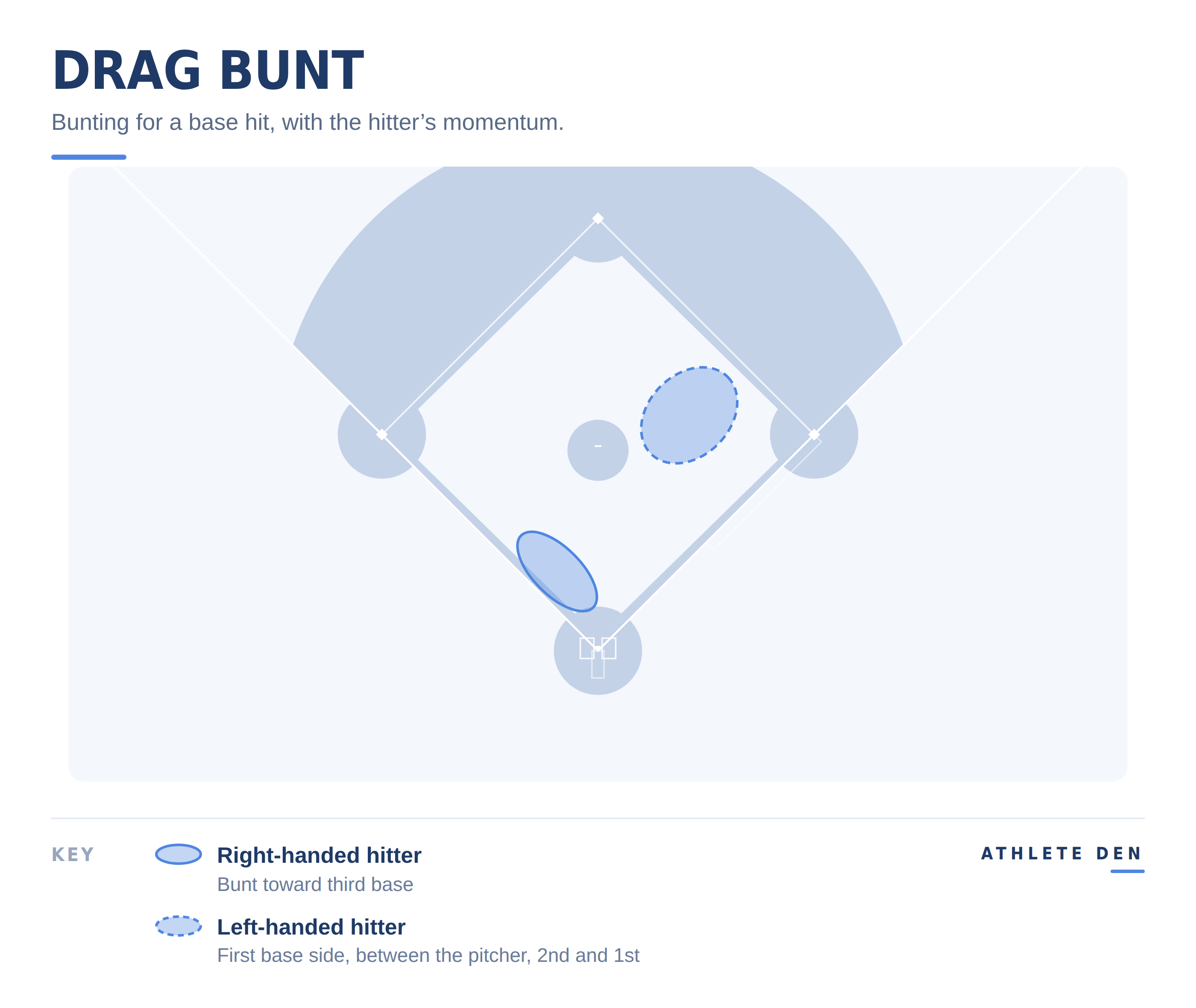
Drag Bunt
The drag bunt is primarily used by faster runners trying to reach first safely.
The hitter waits until the last possible moment before showing bunt and places the ball where the defense has the longest throw.
- Left-handed hitters typically drag bunt toward the first-base side.
- Right-handed hitters usually drag bunt toward the third-base line.
The key is making the defense rush.
Push Bunt
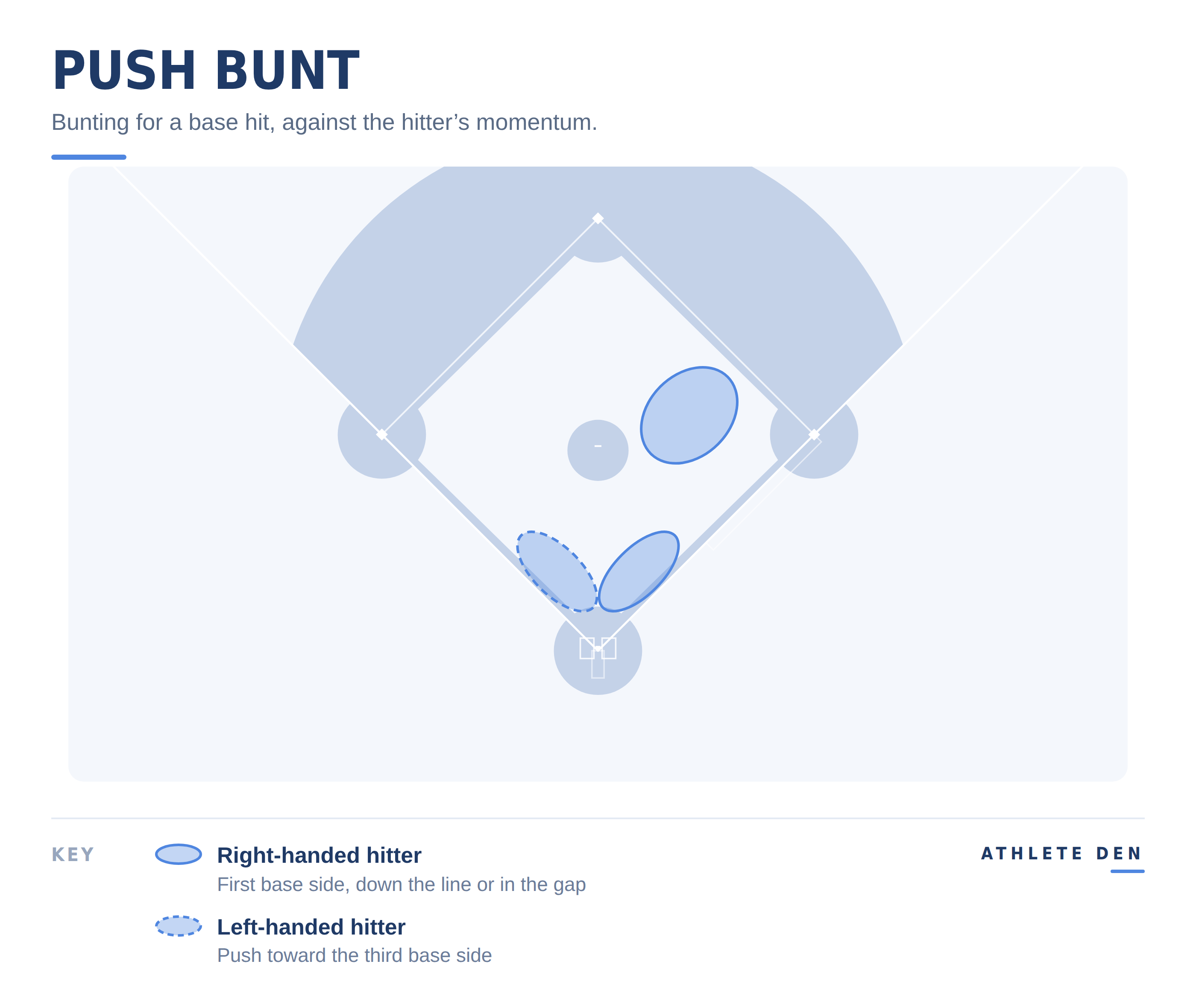
The push bunt combines elements of a sacrifice bunt and a drag bunt.
Instead of simply deadening the baseball, the hitter pushes it into open space, attempting to create a base hit while still maintaining good bunt fundamentals.
When executed properly, the push bunt forces multiple defenders to charge the ball while making an accurate throw on the run.
Suicide Squeeze
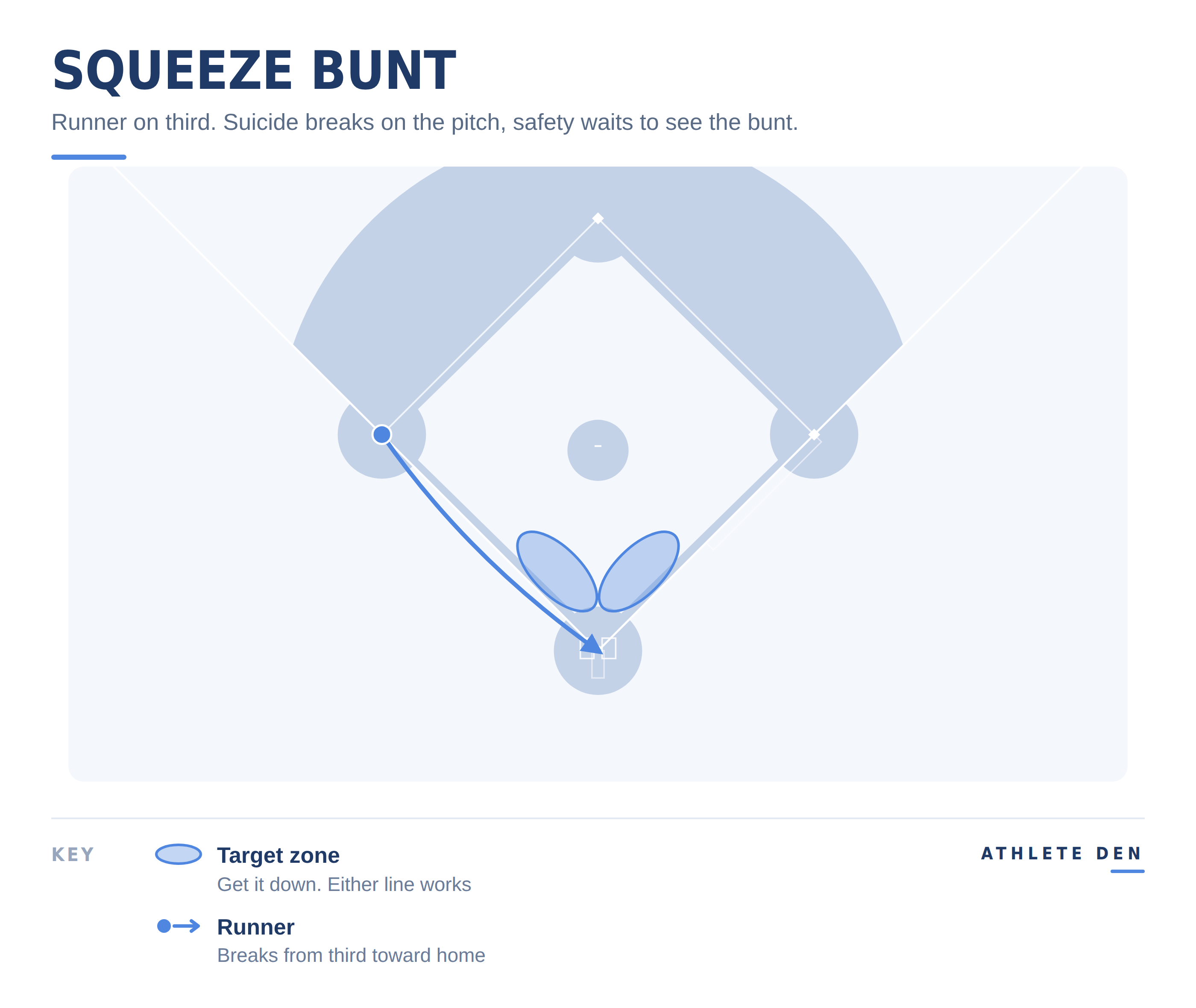
The suicide squeeze is one of baseball’s most exciting offensive plays.
The runner on third breaks for home as the pitcher delivers the ball.
Once the play is on, your only responsibility is getting the bat on the baseball. Whether the pitch is inside, outside, high, or low, you must make contact and get the ball on the ground.
Missing the bunt almost always results in the runner being tagged out.
Safety Squeeze
Unlike the suicide squeeze, the safety squeeze gives the hitter more flexibility.
The runner doesn’t break for home until the bunt is successfully put into play.
If the pitch isn’t a strike, don’t force the bunt. Taking a ball is often the smarter decision.
Fake Bunt
Sometimes showing bunt is just as valuable as actually bunting.
By squaring early and pulling the bat back before contact, you can force corner infielders to charge, opening larger holes for a slap hit or line drive.
The fake bunt is also commonly used to distract the defense during steal attempts.
When Should You Bunt?
Bunting isn’t something you should do randomly.
Some of the best situations include:
- Runner on first with no outs.
- Runners on first and second with no outs.
- Runners on second and third with no outs.
- Runner on third when the defense is playing back.
- Against a dominant pitcher when every run matters.
- To surprise a defense that is playing deep.
- To take advantage of an aggressive shift or defensive alignment.
Good teams understand that sometimes one run is the difference between winning and losing.
Bunting Fundamentals
No matter what type of bunt you’re attempting, a few fundamentals remain the same.
Wait as long as possible before showing bunt. Revealing your intentions too early allows the defense to adjust.
Keep the barrel above your hands and angle the bat slightly upward. Think about catching the baseball with your bat rather than stabbing at it.
Use your legs to adjust to the pitch, not your hands. Move your body into position while keeping the bat quiet.
To deaden the baseball, try to make contact closer to the end of the barrel rather than the sweet spot.
Most importantly, bunt strikes unless your coach has called a squeeze play. Chasing pitches outside the strike zone usually leads to poor results.
The Slash Play
One advanced variation every player should learn is the slash.
Show bunt early to draw the infield in, then pull the bat back just before contact and take a controlled swing.
When executed correctly, the charging infield creates larger holes for hard-hit ground balls and line drives.
The slash is especially effective with runners on base when the defense is expecting a sacrifice bunt.
Final Thoughts
Bunting may not generate highlight reels like towering home runs, but it continues to win baseball games.
Players who can bunt consistently become more versatile, more valuable, and more difficult for defenses to predict.
Whether you’re laying down a sacrifice bunt, beating out a drag bunt for a hit, or executing a squeeze play in a big moment, mastering the fundamentals of bunting gives you another weapon that can help your team succeed.
The best players aren’t just talented. They’re fundamentally sound.
Learning to bunt is one more way to separate yourself from the competition.


Leave a Reply